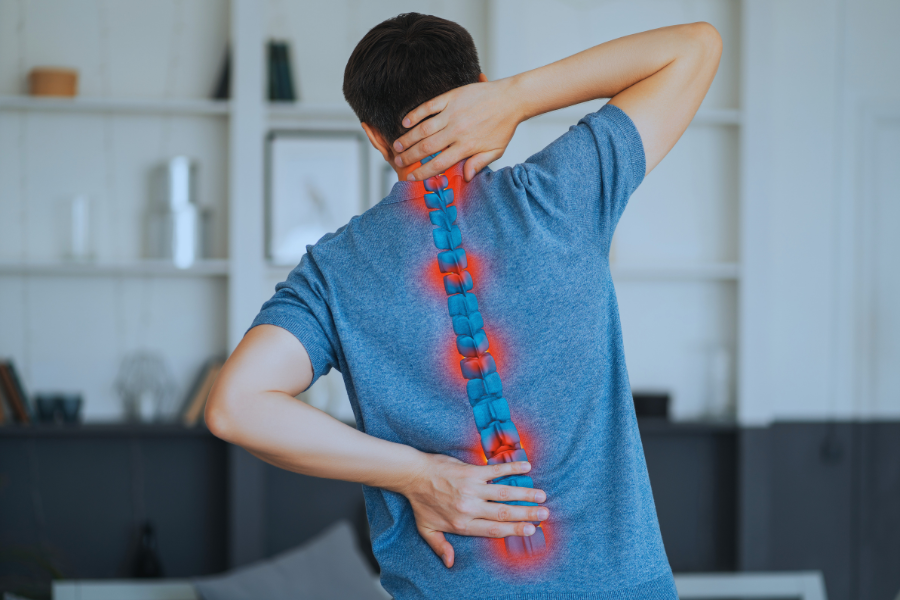
8 Best Alternatives to Laminectomy for Spinal Stenosis in 2026
Spinal stenosis doesn't always require surgery. This article reviews eight evidence-based alternatives to laminectomy, including physical therapy, behavioral pain retraining, acupuncture, medications, minimally invasive procedures, and movement practices. It also explains how central sensitization influences chronic pain and why individualized treatment matters.

Spinal stenosis, a narrowing of the spinal canal that puts pressure on nearby nerves, affects roughly 11% of adults in the United States. As the population ages, that number will keep climbing. Laminectomy, a surgical procedure that removes part of the vertebral bone to relieve pressure, is one of the most common interventions for spinal stenosis, with roughly 600,000 surgeries performed each year in the US for stenosis-related conditions.
But laminectomy is not always necessary, and it is not always the final answer. Long-term follow-up from one of the largest spinal surgery trials ever conducted found that the surgical benefit narrowed considerably by year eight compared with conservative care. Meanwhile, research shows that chronic spinal pain often involves central sensitization, a process in which the nervous system amplifies pain signals beyond what the structural narrowing alone would explain. Nearly half of adults with chronic spinal pain score positive for central sensitization symptoms, and this amplified pain response predicts worse surgical outcomes.
This means the question is not just whether to operate, but whether the pain is coming entirely from compression, or whether the nervous system itself has become part of the problem.
Below are eight evidence-based alternatives to laminectomy, ranging from behavioral and movement-based approaches to minimally invasive procedures. Each has peer-reviewed support, and several work well in combination. Talk with your spine specialist before making changes to your care plan.
Key Takeaways
- Laminectomy benefits narrow over time, and nearly half of chronic spinal pain cases involve nervous-system amplification that surgery does not address.
- Behavioral pain retraining programs have strong trial evidence, with one brain-based approach showing 55% of participants pain-free at five years.
- Physical therapy remains first-line, and acupuncture now has randomized trial support specifically for spinal stenosis.
- Lin Health's approach is based on neuroplastic pain research, delivered through coach-led sessions and covered by most major insurance plans.
- Minimally invasive procedures like MILD and interspinous spacers offer a middle-ground option with shorter recovery than laminectomy.
1. Behavioral Pain Retraining Programs
When spinal stenosis pain lasts for months, the brain and nervous system may begin to amplify pain signals on their own. This process, called central sensitization, happens in nearly half of adults with chronic spinal pain. It may also explain a striking fact: 80% are asymptomatic among adults over 60 who have radiological evidence of spinal stenosis. The degree of structural narrowing does not always determine the degree of pain.
Behavioral pain retraining targets this neuroplastic component directly, addressing the part of the pain that comes from the brain and nervous system rather than from compression alone.
How It Works
These programs use evidence-based psychological therapies, including cognitive behavioral therapy (CBT), acceptance and commitment therapy (ACT), emotional awareness and expression therapy (EAET), and pain reprocessing therapy (PRT). The goal is to change how the brain processes pain signals. Patients work with trained coaches or therapists to:
- Reduce fear-avoidance cycles that limit mobility
- Address emotional patterns that reinforce chronic pain
- Retrain the nervous system's response to pain signals
- Build confidence in safe movement
The approach does not replace medical evaluation for structural compression. It addresses the component of pain that imaging alone does not capture.
What the Research Shows
A Cochrane review of 59 controlled trials found that CBT reduces pain and disability in adults with chronic pain, with benefits maintained at follow-up. A 2025 systematic review found that cognitive functional therapy may reduce disability in adults with chronic spinal pain, including people with lumbar spinal stenosis, though the certainty of evidence was low.
Pain reprocessing therapy, one of the modalities used in behavioral programs, showed that 55% remained pain-free at five years in a randomized trial of adults with chronic back pain, compared with 26% in the placebo group and 36% with usual care.
Central sensitization also predicts worse surgical outcomes, which suggests that addressing the nervous-system component before or alongside surgery may improve results regardless of which path a patient chooses.
Who May Benefit
Adults whose spinal stenosis pain has lasted three months or longer, particularly those whose symptoms seem disproportionate to imaging findings. Also suitable for people who continue to have pain after a prior surgery, or who want to try conservative options before considering an operation.
Lin Health is a leading program in this category, combining CBT, ACT, and PRT in a coach-led format that is covered by most major insurance plans. More on how Lin Health works is covered below.
2. Physical Therapy and Targeted Exercise
Physical therapy is typically the first conservative treatment physicians recommend for lumbar spinal stenosis. Structured exercise programs focus on improving spinal flexibility, core stability, and walking endurance while reducing the nerve-related symptoms that make daily activities difficult.
How It Works
A physical therapist designs a personalized program that usually includes:
- Flexion-based exercises that open the spinal canal (stenosis symptoms often ease with forward bending)
- Core strengthening to stabilize the lumbar spine and reduce load on compressed structures
- Aerobic conditioning such as walking, cycling, or aquatic therapy to improve endurance
- Manual therapy to address stiffness and improve range of motion
What the Research Shows
A randomized trial comparing physical therapy to surgical decompression found that both groups improved significantly in pain and function, though the surgery group showed somewhat greater gains. A 2025 secondary analysis of that trial identified responsive patient subgroups, suggesting that patient selection matters more than a blanket recommendation for or against surgery.
The American College of Physicians recommends nonpharmacologic first-line therapy including exercise for chronic low back pain, which includes many cases of symptomatic stenosis.
Who May Benefit
Most adults with mild-to-moderate spinal stenosis symptoms, especially those who have not yet completed a structured physical therapy course. Also effective as a complement to other treatments on this list, including behavioral pain retraining and acupuncture.
3. Acupuncture
Acupuncture has moved from niche alternative therapy to mainstream clinical research over the past decade. For spinal stenosis specifically, a recent multicenter randomized trial now provides direct evidence.
How It Works
A licensed acupuncture practitioner inserts thin needles at specific points along the body. The proposed mechanisms include stimulating the release of endogenous opioids and anti-inflammatory mediators, modulating pain signaling pathways in the spinal cord and brain, and reducing local inflammation around compressed nerves.
Sessions typically run 20 to 40 minutes, two to three times per week during the initial treatment phase.
What the Research Shows
A 2024 multicenter randomized trial published in Annals of Internal Medicine found that acupuncture reduced stenosis-related disability in adults with degenerative lumbar spinal stenosis and neurogenic claudication compared to sham acupuncture. Scores on the modified Roland-Morris Disability Questionnaire improved from 12.6 to 8.1 in the acupuncture group versus 12.7 to 9.5 with sham, with effects lasting up to 24 weeks after a 6-week treatment course. The difference was statistically significant but did not reach the minimal clinically important difference threshold.
A 2023 systematic review of non-pharmaceutical therapies confirmed that acupuncture outperformed sham treatment for intermediate-term (6-month) back pain relief and lumbar function improvement in people with degenerative lumbar spinal stenosis.
Who May Benefit
Adults with stenosis-related back pain and neurogenic claudication who prefer a non-medication, non-surgical option. Acupuncture may be especially useful alongside physical therapy or behavioral approaches as part of a multimodal plan.
4. Non-Opioid Medications
Several classes of medications can provide symptomatic relief for spinal stenosis without the dependence and tolerance risks associated with opioids. These are not curative, but they may help manage pain well enough to participate in active rehabilitation.
How It Works
The main non-opioid medication categories for stenosis include:
- NSAIDs (ibuprofen, naproxen, celecoxib) to reduce inflammation and pain
- Gabapentinoids (gabapentin, pregabalin) to target neuropathic pain signaling
- SNRIs (duloxetine) to modulate pain processing in the central nervous system
- Acetaminophen as a mild analgesic, often used in combination
What the Research Shows
A 2024 systematic review found no consistent long-term benefit across non-opioid medication classes for chronic pain, though short-term improvements were observed. Gabapentin may be indicated for patients with neurogenic claudication symptoms, though evidence remains limited by study heterogeneity.
Duloxetine shows moderate neuropathic pain efficacy and a lower risk profile than opioids, but its effect specifically in spinal stenosis has not been conclusively established.
The ACP guideline lists NSAIDs as first-line pharmacologic therapy for chronic low back pain when nonpharmacologic approaches are insufficient.
Who May Benefit
Patients whose stenosis symptoms interfere with sleep, daily function, or participation in physical therapy. Medications work best as part of a multimodal plan, not as a standalone long-term solution.
5. Epidural Steroid Injections
Epidural steroid injections (ESIs) deliver anti-inflammatory corticosteroid directly into the epidural space near compressed nerve roots. They are one of the most commonly performed interventional procedures for spinal stenosis.
How It Works
Using fluoroscopic or CT guidance, a physician injects a corticosteroid (often combined with a local anesthetic) near the affected spinal nerve roots. The medication reduces inflammation and swelling, which may temporarily relieve pain and improve walking tolerance. Most patients receive one to three injections spaced two to four weeks apart.
What the Research Shows
A 2025 systematic review by the American Academy of Neurology, covering 90 randomized controlled trials, found that ESIs probably do not reduce short-term pain in lumbar spinal stenosis (success rate difference of -3.5%). However, ESIs may reduce short-term disability with a number needed to treat of 4, and possibly reduce longer-term disability at six months or beyond with a number needed to treat of 8.
In short: ESIs may help with function and mobility in the short term but show limited evidence for reducing pain itself in spinal stenosis populations.
Who May Benefit
Patients with significant neurogenic claudication or radicular leg symptoms who need short-term relief to participate in physical therapy or other active treatments. Less appropriate as a standalone long-term strategy.
6. Yoga, Tai Chi, and Movement-Based Practices
Gentle movement practices combine physical exercise with breath awareness, balance training, and mindfulness. For people with spinal stenosis, certain styles emphasize the flexion-based postures and slow, controlled movements that tend to ease symptoms.
How It Works
- Yoga (particularly restorative or therapeutic styles) uses postures, breathing, and relaxation to improve flexibility, core stability, and body awareness
- Tai chi involves slow, flowing movements with weight shifting and balance work, performed standing
- Qigong combines gentle movement, breathing, and meditation
All three promote spinal mobility without the impact loading that can aggravate stenosis symptoms. Many sessions can be adapted for seated or modified standing positions.
What the Research Shows
A 2024 meta-analysis of 10 randomized trials with 886 participants found that tai chi reduces pain and disability in adults with chronic low back pain compared with control conditions.
The ACP guideline recommends yoga and tai chi as first-line nonpharmacologic options for chronic low back pain. A 2024 randomized trial also demonstrated that virtual tai chi and qigong improved low back pain outcomes at 8 and 12 weeks.
Who May Benefit
Adults with mild-to-moderate stenosis symptoms who want an active, low-impact practice they can continue at home. Especially suitable for older adults, since tai chi also improves balance and may reduce fall risk.
7. Minimally Invasive Lumbar Decompression (MILD Procedure)
The MILD procedure is a percutaneous (through-the-skin) technique that removes small amounts of bone and ligament tissue to create more space in the spinal canal. It sits between fully conservative care and traditional open surgery.
How It Works
Under fluoroscopic guidance, a physician inserts specialized instruments through a small incision in the back. Small portions of the ligamentum flavum and bone are removed to decompress the spinal canal. The procedure:
- Requires no general anesthesia (typically performed under light sedation)
- Takes approximately 30 to 60 minutes
- Is performed as an outpatient procedure with same-day discharge
- Preserves spinal stability with no implants placed
What the Research Shows
A 2025 systematic review of randomized and prospective trials found level 1b-2b evidence supporting MILD's efficacy for reducing pain and disability in lumbar spinal stenosis. The MOTION randomized trial showed a 16.1-point ODI improvement in the MILD group at one year, compared with 2.0 points for conservative medical management alone.
However, a 2025 propensity-matched comparison found that patients receiving traditional open decompression had higher pain improvement rates (43.1% versus 22.2% for MILD), suggesting that MILD trades some efficacy for a less invasive profile.
Who May Benefit
Adults with moderate lumbar spinal stenosis caused primarily by ligamentum flavum hypertrophy who want a shorter recovery than traditional surgery. Less suitable for severe stenosis, multi-level disease, or cases where bony compression is the primary cause.
8. Interspinous Spacer Devices
Interspinous spacers are small implants placed between the spinous processes (the bony projections along the back of the spine) to hold the spinal canal in a slightly flexed position, creating more room for compressed nerves.
How It Works
The most studied device is the Superion spacer (FDA-approved in 2015). During the procedure:
- The device is inserted through a small incision under fluoroscopic guidance
- It sits between adjacent spinous processes, limiting extension (backward bending)
- The procedure is performed under local anesthesia or light sedation as an outpatient
- It preserves the option for future laminectomy if needed
By holding the spine in slight flexion, the spacer mimics the position that typically provides relief for stenosis patients, similar to the relief many feel when leaning forward over a shopping cart.
What the Research Shows
Four-year follow-up data showed that 84.3% maintained success among Superion patients, with 73% improvement in leg pain severity from baseline. However, reoperation rates remain a concern: real-world registry data show that reoperation rates are higher for interspinous spacers than standard decompression, and long-term benefit beyond four to five years is not well established.
For patients with stenosis plus degenerative spondylolisthesis, the NORDSTEN-DS trial (published in BMJ in 2024) showed that decompression alone matched fusion at five years, with 63% of patients in both groups achieving a clinically meaningful disability reduction. This finding may influence whether spacers, simpler decompression, or fusion is recommended for individual patients.
Who May Benefit
Adults with moderate, single-level lumbar spinal stenosis who want a less invasive procedure than laminectomy and who experience relief when leaning forward. Not ideal for multi-level stenosis, severe canal narrowing, or significant spinal instability.
How Lin Health Helps with Spinal Stenosis Pain
Many people with spinal stenosis have been told their pain is purely structural: a narrowed spinal canal pressing on nerves, and surgery is the fix. But research increasingly shows that chronic spinal pain involves more than compression alone. Nearly half of adults with chronic spinal pain show signs of central sensitization, meaning the nervous system itself has begun amplifying pain signals beyond what the structural issue would produce. This is why some people with significant stenosis on MRI feel little pain, while others with mild narrowing experience severe symptoms.
Lin Health's approach is based on neuroplastic research, applying behavioral retraining to address this nervous-system component. The program uses CBT, ACT, and pain reprocessing therapy to help patients:
- Understand why the pain alarm may be "stuck" even after tissue changes have stabilized
- Reduce fear-avoidance patterns that limit mobility and worsen deconditioning
- Address the emotional and cognitive cycles that reinforce chronic pain
- Build confidence in safe movement, informed by the latest pain neuroscience
What the program looks like:
Lin Health pairs each patient with a trained recovery coach for weekly one-on-one sessions, between-session chat support, and a structured app with learning modules and guided practice. The clinical model was developed in collaboration with Mayo Clinic.
Coverage and access:
Lin Health is covered by most major insurance plans in Colorado, Texas, Florida, California, and New York. Wait times are short, often a same-day callback after signup. Most patients pay zero out of pocket.
Explore related resources:
- Back pain alternatives
- Spinal fusion alternatives
- Surgery alternatives for LBP
- Central sensitization treatment
- Healing chronic back pain
- Patient recovery stories
If you have been living with spinal stenosis pain and are exploring options beyond surgery, a behavioral approach may be worth considering, especially if your symptoms have lasted longer than three months or have not fully responded to other treatments.
FAQ
Can spinal stenosis be treated without surgery?
Yes. Many people with lumbar spinal stenosis respond to conservative treatments including physical therapy, behavioral pain retraining, acupuncture, and medication. The ACP recommends nonpharmacologic approaches as first-line therapy for chronic low back pain. Surgery is typically considered after conservative options have been tried for at least 12 weeks without adequate relief.
What happens if you don't get surgery for spinal stenosis?
Spinal stenosis does not always progress. Some patients remain stable for years with conservative management. Long-term SPORT trial data showed that the gap between surgical and nonsurgical outcomes narrowed by year eight. However, patients with progressive neurological symptoms, including weakness or bowel and bladder changes, should seek prompt surgical evaluation.
What is the newest treatment for spinal stenosis in 2026?
Behavioral pain retraining represents one of the most significant recent advances. A 2025 JAMA Psychiatry trial found that 55% of participants with chronic back pain who received pain reprocessing therapy remained pain-free at five years. The MILD procedure and interspinous spacers also continue to evolve as less-invasive procedural alternatives.
Is physical therapy enough for spinal stenosis?
Physical therapy produces meaningful improvement for many adults with mild-to-moderate stenosis. A 2025 analysis identified specific subgroups of stenosis patients who respond well to structured nonsurgical treatment. Combining physical therapy with other approaches, such as behavioral pain retraining or acupuncture, may improve outcomes for patients with more persistent symptoms.
Does insurance cover non-surgical treatments for spinal stenosis?
Most insurance plans cover physical therapy, medications, and epidural injections for spinal stenosis. Coverage for acupuncture varies by insurer and state. Lin Health's behavioral pain retraining program is covered by most major insurance plans in Colorado, Texas, Florida, California, and New York. Check with your insurer for specific coverage details.
Can spinal stenosis pain come from the brain and nervous system?
Research on central sensitization shows that nearly half of adults with chronic spinal pain have nervous system changes that amplify signals beyond what structural compression alone would produce. This may explain why some people with visible stenosis on imaging feel no pain, while others with mild narrowing have significant symptoms. Behavioral approaches target this brain-based component.
This article is for informational purposes and is not medical advice. Consult a qualified healthcare provider before making changes to your treatment plan. Lin Health does not diagnose or treat structural spinal conditions; its program addresses the behavioral, cognitive, and emotional components of chronic pain.


.png)
.png)