
Best Evidence-Based Therapies for TMJ Pain in 2026
TMJ pain treatments vary widely, but research now points to clear first-line options. This guide reviews the strongest evidence for education, supervised exercise, manual therapy, cognitive behavioral therapy, medications, and digital care while explaining which popular treatments have limited support and when persistent pain may involve the nervous system.

Few pain conditions are treated as inconsistently as jaw pain. Two people with nearly identical symptoms can walk out of two offices with completely different plans: one gets a night guard and a referral for bite adjustment, the other gets jaw exercises and a conversation about stress and sleep.
That inconsistency is not random. It reflects a real gap between what is commonly offered for TMJ pain and what the research actually supports. This guide ranks therapies by the strength of evidence behind them in 2026, says plainly which popular treatments do not hold up, and covers where the persistent cases fit.
Key Takeaways
- "TMJ pain" clinically means temporomandibular disorders (TMD), a group of more than 30 related conditions affecting the jaw joint, chewing muscles, and surrounding structures.
- The therapies with the strongest 2026 guideline support are conservative and reversible: education, supervised jaw and postural exercise, manual therapy, and cognitive behavioral therapy.
- CBT with biofeedback and therapist-assisted jaw mobilization ranked highest for pain relief across 153 randomized trials, though Cochrane rates CBT's evidence more modestly.
- Reversible night guards carry a conditional recommendation against; permanent bite changes, disc surgery, and NSAID-opioid combinations carry strong recommendations against.
- When jaw pain persists past healing timelines or travels with migraine or fibromyalgia, Lin Health's approach is based on nervous-system research and complements dental care.
What "TMJ Pain" Actually Means
Most people use "TMJ" to name the pain. Clinicians use it to name the joint, and they call the problem TMD, short for temporomandibular disorders. The distinction matters because TMD is not one condition. It covers more than 30 disorders involving the jaw joint itself, the muscles that move it, or both.
That range is why treatment varies so much. Pain coming mostly from the chewing muscles behaves differently from pain coming from the joint, and the two respond to different things.
The scale is larger than most people assume. Roughly 11 to 12 million US adults have pain in the temporomandibular joint region, which worked out to 4.8% of US adults in the most recent national survey data specific to orofacial pain. It is about twice as common in women, particularly between ages 35 and 44.
One more piece of context shapes everything below. TMD frequently co-occurs with headache, fibromyalgia, back pain, sleep problems, and irritable bowel syndrome, and the recognition that some TMDs behave as systemic pain conditions with local jaw manifestations rather than as a purely mechanical joint problem is exactly what moved surgery out of the first-line position.
How These Therapies Were Ranked
The ordering below follows the evidence, not the market. Two sources do most of the work: a 2023 clinical practice guideline for chronic TMD pain, and its companion network meta-analysis pooling 153 randomized trials and 8,713 participants across 59 interventions. A 2026 review of 129 more recent trials reaches the same conclusion, describing education, behavioral therapy, and exercise as first-line options.
1. Education, Reassurance, and Self-Management
How it works
This is the least glamorous entry and the most consistently supported. It means understanding what is driving your specific jaw pain, learning which habits load the joint and muscles, doing home stretches, softening the diet during flares, and having a clinician tell you honestly what the likely course is.
What the evidence shows
Usual care, defined in the guideline as home exercises, stretching, reassurance, and education, carries a strong recommendation in favour for chronic TMD pain. In the pooled analysis it reached the same 23% to 30% band for meaningful pain relief as several far more involved interventions.
A 2026 umbrella review of 11 systematic reviews found generally beneficial effects for self-management built on patient education, behavioural therapy, and jaw exercises. The honest caveat: 6 of those 11 reviews were favourable and 5 found the evidence insufficient either way.
Who it tends to fit
Nearly everyone, as a starting point. For adults in the first months of jaw pain, this is often the whole plan. Its real value is that it costs little and closes no doors, which matters in a condition where irreversible choices are hard to undo.
2. Supervised Jaw Exercise and Stretching
How it works
Structured, progressive movement of the jaw: controlled opening, stretching, and strengthening, prescribed and monitored by a clinician rather than improvised from a video.
What the evidence shows
Supervised jaw exercise and stretching carries a strong recommendation in favour, and it tied with manipulation as the top-ranked intervention for physical functioning, both at a 43% risk difference for reaching a meaningful improvement. For pain specifically it landed in the 23% to 30% band.
Broader exercise programs, including postural and aerobic work, may improve activity, participation, and quality of life in adults with TMD, though that particular review rated its certainty as very low and urged caution.
Who it tends to fit
Adults with limited or painful jaw opening, and anyone whose function has narrowed more than their pain has. The supervision matters. Loading an irritated jaw incorrectly can set progress back.
3. Therapist-Assisted Mobilization and Manual Trigger Point Therapy
How it works
Hands-on treatment delivered by a trained clinician: guided mobilization of the joint, and direct pressure techniques applied to tender points in the chewing and neck muscles.
What the evidence shows
Both carry strong recommendations in favour. In the pooled analysis, therapist-assisted jaw mobilization (36%) and manual trigger point therapy (32%) were two of the three highest-ranked interventions for pain relief at moderate-to-high certainty.
A separate 2025 meta-analysis found mobilization produced meaningful pain reduction and improved mouth opening at four weeks compared with controls. The evidence base is small, and it reports outcomes only that far out. Short-term gains are documented here. Durability is not.
Who it tends to fit
Adults with muscle-dominant jaw pain, palpable tender points, or restricted movement. Frequently paired with item 2 rather than used alone.
4. Cognitive Behavioral Therapy, With or Without Biofeedback
How it works
CBT for jaw pain is not general talk therapy, and it is not a suggestion that the pain is imagined. It targets the specific loops that keep a sensitized pain system switched on: clenching under stress, guarding the jaw, catastrophic thinking during flares, and the sleep disruption that follows.
Biofeedback adds live physiological feedback so you can see muscle tension you cannot otherwise feel. These are the same CBT principles used in chronic pain care, applied to the jaw.
What the evidence shows
CBT with or without biofeedback or relaxation therapy carries a strong recommendation in favour. CBT augmented with biofeedback or relaxation tied with therapist-assisted jaw mobilization at the top for pain relief in the pooled analysis, both at a 36% risk difference, with CBT alone in the 23% to 30% band.
The Cochrane evidence is more measured, and it deserves to be stated rather than skipped. The current Cochrane review found low-certainty evidence that CBT may reduce pain at longest follow-up but not at treatment completion, with no clear benefit for pain-related disability. In other words, the benefit shows up later rather than immediately, and the confidence around it is limited.
Where the picture sharpens is in combination. Psychological treatment added to standard and manual care reduced pain more than counselling plus standard care, on very low quality evidence, while psychological treatment on its own looked roughly equivalent to standard treatment. Two related notes matter for anyone choosing components:
- Biofeedback on its own is a weaker bet. A 2025 network meta-analysis found biofeedback did not outperform other interventions on pain intensity, though it showed comparable efficacy and may add value through self-regulation. The guideline recommends CBT with biofeedback, and separately recommends against biofeedback alone.
- Mindfulness has early, narrow support. An 8-week mindfulness program reduced pain points, stress, and pain catastrophizing in a trial of women aged 18 to 61 with chronic painful TMD. That population is worth noting: the trial enrolled women only, so it does not establish the same effect in men.
Who it tends to fit
Adults whose jaw pain flares with stress, who clench or grind, whose pain has outlasted the expected healing window, or who are caught in the pain-tension-worse-pain cycle. It layers onto physical treatment rather than replacing it.
5. Supervised Postural Exercise
How it works
Work aimed at the head, neck, and shoulder girdle rather than the jaw itself, on the reasoning that jaw mechanics and muscle load do not stop at the jawline.
What the evidence shows
Supervised postural exercise carries a strong recommendation in favour and reached the 23% to 30% band for meaningful pain relief. Manipulation combined with postural exercise carries a conditional recommendation in favour.
Who it tends to fit
Adults whose jaw pain travels with neck pain or headaches, which is a large share of this group.
6. Acupuncture and Dry Needling
How it works
Fine needles inserted at specific points, or directly into taut bands in the chewing and neck muscles in the case of dry needling.
What the evidence shows
Acupuncture carries a conditional recommendation in favour and ranked among the top interventions for physical functioning at a 42% risk difference. Within the acupuncture family specifically, a network meta-analysis of 35 trials ranked dry needling combined with physical therapy highest for both pain and mouth opening, with the authors cautioning that some techniques appeared in too few trials to rank reliably.
Who it tends to fit
Adults with muscle-dominant pain who have not responded to exercise and manual therapy, or who want an additional option alongside them. The conditional rather than strong recommendation reflects lower certainty, not a negative finding.
7. Short-Term Medication, Matched to the Pain Type
How it works
Medication in TMD is a bridge, not a destination. It is used to lower pain enough that the therapies above become possible.
What the evidence shows
The guideline's only conditional recommendation in favour of a drug pairs it with therapy: CBT combined with anti-inflammatory medication. Several commonly prescribed drugs carry conditional recommendations against for chronic TMD pain, including gabapentin, benzodiazepines, acetaminophen preparations, topical capsaicin, and beta-blockers.
Low-dose amitriptyline sits outside the guideline's list and has its own modest support: a 2025 review found it reduced pain intensity across three very small trials, particularly when combined with an oral appliance, at very low certainty by GRADE.
On opioids, the direction is unambiguous. NSAIDs combined with opioids carry a strong recommendation against for chronic TMD pain, and the CDC's 2022 prescribing guideline directs clinicians to prefer nonopioid and nonpharmacologic therapies for chronic pain generally.
Who it tends to fit
Adults in an acute flare, or those whose pain blocks participation in exercise and behavioral work. A prescribing clinician should own this decision and revisit it.
8. Digitally Delivered Behavioral and Self-Management Programs
How it works
The same education, jaw exercise, habit tracking, and behavioral content described above, delivered through an app or a remote program rather than in a clinic. This matters because access, not evidence, is the usual barrier to behavioral care for jaw pain.
What the evidence shows
A multicenter randomized trial compared a digital therapeutic delivering education, guided jaw exercises, habit tracking, and psychoeducation against a sham app that only recorded symptoms. The active program produced substantially greater pain reduction at six weeks, with improvements in jaw opening, functional limitation, and oral behaviors. The authors positioned digital delivery as an adjunct to conventional care rather than a replacement for it.
A smaller trial found that adding an app delivering repeated CBT exercises to conventional treatment improved pain and mouth opening more than conventional treatment alone, though its authors called for larger trials to confirm it. Both trials tested the delivery format. Neither validates any particular commercial product on the market.
Who it tends to fit
Adults who cannot reach a behavioral clinician with TMD experience, which is most people, and those who want structured between-visit support.
What the Evidence Does Not Support
Being specific about what does not hold up is part of being evidence-based, and in TMD it may matter more than the ranking above.
Night guards and occlusal splints are weaker than their popularity suggests. Reversible occlusal splints carry a conditional recommendation against. The 2024 Cochrane review of occlusal interventions pooled 57 trials and 2,846 participants and concluded that the results are inconclusive and the certainty very low for every outcome in every comparison.
A 2025 meta-analysis is more positive, finding a short-term pain benefit over other conservative therapies at moderate certainty in adults aged 15 to 40, with long-term effects unestablished. Reasonable clinicians land in different places here. What the evidence does not support is treating an appliance as the definitive answer.
Permanent bite changes are a different category of risk. Irreversible oral splints carry a strong recommendation against. The 2024 Cochrane review set out to assess occlusal adjustment, grinding down teeth to change how they meet, alongside splints. Its verdict across that whole body of evidence was inconclusive, at very low certainty, which is a thin basis for a change that cannot be reversed. Federal dental research guidance is direct about it, advising patients to stay away from treatments that permanently change the jaw joints, teeth, or bite. Orthodontics has a narrow role. A 2025 scoping review found mixed results for orthodontics on its own, and low-to-moderate quality evidence that combined orthodontic-surgical treatment may help selected patients. Its guidance is conservative care first, orthognathic surgery reserved for clearly indicated skeletal discrepancies, and no promise of cure.
Botulinum toxin is not the shortcut it is marketed as. It carries a conditional recommendation against. An umbrella review of 18 systematic reviews found it more effective than placebo for pain but not superior to standard treatments, and documented decreased mandibular cortical thickness and muscle atrophy among its adverse effects. Those authors concluded it should be the last treatment alternative. That evidence covers muscle-related TMD specifically.
Injections and procedures sit further down than most patients expect. Arthrocentesis, hyaluronic acid injection, corticosteroid injection, trigger point injection, low-level laser therapy, and TENS all carry conditional recommendations against for chronic TMD pain. Discectomy carries a strong recommendation against. Total joint replacement rests on a single non-randomized comparative study at very low certainty, and that study enrolled people with TMJ ankylosis, which is a different clinical situation from ordinary jaw pain.
None of this means surgery has no place in TMD care. It means the bar is high, the candidates are few, and the sequence matters.
When TMJ Pain Behaves Like a Nervous-System Problem
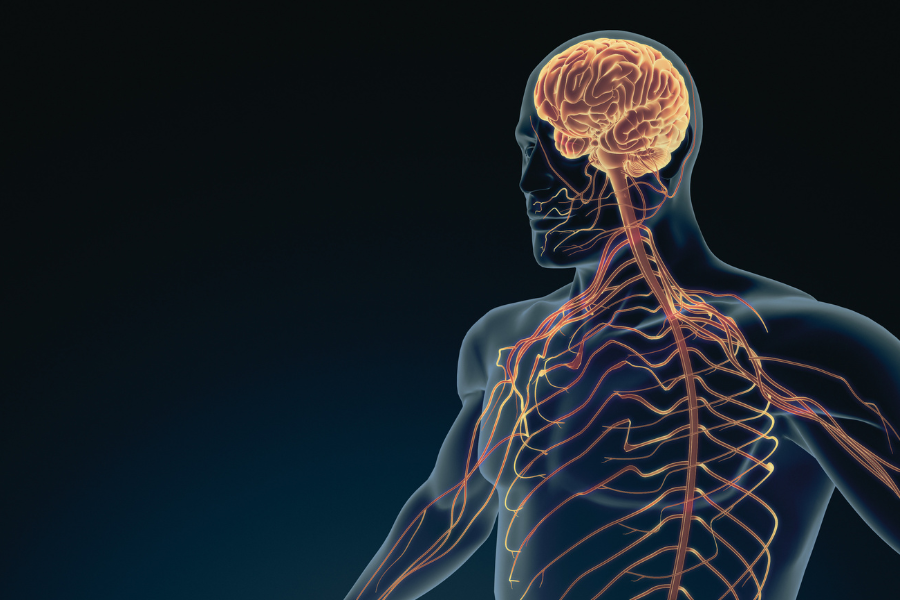
Some jaw pain is straightforwardly mechanical and settles with the conservative care above. Some does not. When pain persists well past expected healing, spreads beyond the jaw, or arrives alongside other persistent symptoms, a different mechanism is often in play.
TMD is one of the conditions grouped as chronic overlapping pain conditions, and genetic analysis found TMJ pain loads onto a nociplastic pain factor shared with chronic widespread pain, headache, and IBS. Two caveats belong with that. The analysis used chronic widespread pain and broad headache as stand-ins for fibromyalgia and migraine rather than those diagnoses directly, and the authors flag that the TMJ estimate itself is imprecise because the underlying genetic data on TMJ cases is thin. It is a signal worth taking seriously rather than a settled fact.
The honest version of this story has a wrinkle. In the OPPERA cohort study, experimental pain sensitivity tracked with how many overlapping pain conditions a person had rather than with TMD status by itself.
That argues against a simple "TMD equals a sensitized nervous system" story, and for something more specific: a subset of people carry a broadly amplified pain system, and jaw pain is one place it shows up. If that is you, central sensitization is a more useful frame than another look at your bite, and it is the same mechanism studied across chronic pain conditions.
Two contributing factors belong here because both are modifiable. Poor sleep quality is substantially more common in adults with chronic TMD than in matched controls, at 56.9% versus 22.2%. Anxiety and depression are also significantly elevated in people with TMD, with higher stress correlating with greater severity.
These are associations rather than established causes. They are also the associations most within reach, and sleep in particular is worth addressing directly.
How Lin Health Helps With Persistent TMJ Pain
Lin Health is a coach-led virtual program whose approach is based on research on neuroplastic pain and central sensitization.
The framing is this: after tissue has healed, a pain alarm can stay switched on in the nervous system, becoming a learned pathway that fires without ongoing danger and can spread beyond where it started. That sits behind Tension Myositis Syndrome and related neuroplastic conditions, and it is the same lens applied to chronic migraine and fibromyalgia, the conditions jaw pain most often travels with.
What the program involves:
- A trained recovery coach, not just an app. Weekly live sessions plus chat between them, with app-based learning and practice material. Coach-led delivery tends to support follow-through in a way self-guided tools do not.
- The behavioral modalities that rank well for jaw pain. CBT and ACT-informed techniques, pain neuroscience education, and somatic approaches, drawn from the broader mind-body evidence base for chronic pain. Note the scope honestly: the trials behind pain reprocessing therapy were conducted in chronic back pain, and the emotional awareness trials in other musculoskeletal populations, so those are part of the research lineage the approach draws on rather than TMD-specific evidence.
- Whole-person rather than one joint. If jaw pain is one expression of a system-wide pattern, treating it in isolation tends to leave the pattern intact.
- Covered and reachable. Lin Health is covered by most major insurance plans, with the strongest coverage in Colorado, Texas, Florida, California, and New York, and wait times are short, often a same-day callback.
Where it fits alongside your dentist: the conservative care ranked above stays in place. This is the behavioral layer, delivered by people who work in persistent pain full-time.
If your jaw pain has outlasted the treatments that were supposed to fix it, especially if it travels with migraines, widespread pain, or gut symptoms, a nervous-system-focused approach may be worth exploring. See if Lin Health may help with your persistent jaw pain, and check your insurance eligibility, since most patients pay nothing out of pocket.
FAQ
What is the most effective treatment for TMJ pain?
No single treatment leads for everyone, because TMD covers many conditions. In the pooled analysis of 153 trials, CBT with biofeedback or relaxation and therapist-assisted jaw mobilization ranked highest for pain relief, while supervised jaw exercise and stretching tied with manipulation at the top for function. Most people do better with a combination of conservative therapies matched to their pain type than with any single one.
Do night guards actually work for TMJ pain?
The evidence is weaker than their popularity suggests. The current clinical guideline conditionally recommends against reversible occlusal splints, and a 2024 Cochrane review of 57 trials called the results inconclusive at very low certainty. A 2025 meta-analysis found short-term benefit over other conservative care. A guard may help some people, but it is reasonable to pair it with exercise and behavioral care rather than rely on it alone.
Can stress and anxiety cause TMJ pain?
Anxiety and depression are significantly more common in people with TMD, and higher stress correlates with greater severity. These are associations, not proof of cause. What is clearer is that stress-related clenching and the pain-tension cycle can maintain jaw pain once it starts, which is one reason cognitive behavioral therapy carries a strong guideline recommendation for chronic TMD pain.
Is TMJ surgery ever necessary?
Rarely, and not as a first step. Discectomy carries a strong recommendation against, and evidence for total joint replacement rests on a single non-randomized study in people with TMJ ankylosis. Surgery remains appropriate for a small number of carefully selected patients with clear structural disease, after conservative care has been genuinely tried.
Should I get my bite adjusted or braces for TMJ pain?
The 2024 Cochrane review of occlusal interventions, which covered adjustment as well as splints, reached an inconclusive verdict at very low certainty, and federal dental research guidance advises avoiding treatments that permanently change the jaw joints, teeth, or bite. Orthodontics alone shows mixed results. Because these changes cannot be undone, the sequence matters: conservative care first.
How long does TMJ pain take to improve?
It varies by what is driving it. Manual therapy and mobilization trials show meaningful change within about four weeks, while behavioral approaches tend to build more gradually, with the Cochrane analysis finding CBT's pain benefit at longest follow-up rather than at treatment completion. Pain lasting beyond three months is considered chronic and generally calls for a broader plan.
Does insurance cover behavioral care for jaw pain?
Coverage varies by plan and by program. Lin Health is covered by most major insurance plans, with strongest coverage in Colorado, Texas, Florida, California, and New York, and most patients pay nothing out of pocket once eligibility is verified. Confirm your specific plan before starting anything, and ask whether your dental and medical benefits handle jaw pain differently.
The Bottom Line
The 2026 evidence for TMJ pain points somewhere unglamorous and reassuring: education and self-management, supervised jaw and postural exercise, hands-on mobilization and trigger point work, and cognitive behavioral therapy. Every one of them is conservative, reversible, and closes no doors.
The treatments that carry the most risk are the ones that permanently change your bite or your joint, and they sit at the bottom of the evidence hierarchy rather than the top.
If conservative care has not worked and your jaw pain travels with other persistent symptoms, the next question is probably not what else can be done to the joint. It is whether the pain system itself has become the problem.
This article is for informational purposes and is not medical advice. Consult a qualified healthcare provider about your specific symptoms, particularly before starting or stopping any treatment. Persistent jaw pain, locking, or difficulty opening the mouth should be evaluated by a dentist or physician.


.png)
.png)