Best Treatments For Chronic Prostatitis (CP/CPPS) In 2026
Chronic prostatitis/chronic pelvic pain syndrome requires a personalized approach. This guide explores the latest evidence-based treatments, including behavioral therapy, pelvic floor physical therapy, acupuncture, medications, lifestyle strategies, and multimodal care approaches for managing persistent symptoms. It also explains how recent guidelines support multimodal strategies instead of one-size-fits-all treatment.

Chronic prostatitis/chronic pelvic pain syndrome (CP/CPPS) is the most common urological diagnosis in men under 50. Despite its prevalence, affecting an estimated 2 million US men, effective treatment has been elusive for decades. Many men cycle through antibiotics, supplements, and procedures without meaningful relief.
That is starting to change. In April 2025, the American Urological Association released its first male CP/CPPS guideline. The guideline recommends against empiric antibiotics and instead emphasizes a multimodal approach addressing pelvic floor dysfunction, nervous system sensitization, and psychological contributors. This matters because 90 to 95 percent of chronic prostatitis cases are classified as non-bacterial (NIH Category III), yet many men still receive repeated antibiotic courses that do nothing for their symptoms.
The treatments below are ranked by how well they address the underlying mechanisms of CP/CPPS, with the most comprehensive and evidence-supported approaches listed first.
Key Takeaways
- CP/CPPS is non-bacterial in 90 to 95 percent of cases, and the AUA's 2025 guideline recommends against routine antibiotics.
- Roughly half of men with urologic chronic pelvic pain show central sensitization features, supporting behavioral and brain-based therapies.
- The 2025 AUA guideline recommends CBT as adjunct therapy, the first US guideline for this condition.
- Pelvic floor PT, acupuncture, and phenotype-directed multimodal care each have evidence for reducing CP/CPPS symptoms.
- Lin Health's approach is based on nervous system retraining and addresses chronic pelvic pain as a brain-driven condition.
1. Behavioral and Brain-Based Pain Therapy
For years, CP/CPPS was treated as a purely physical condition. Antibiotics, anti-inflammatories, and procedures targeted the prostate and surrounding tissues. For many men, none of it worked.
Recent research explains why. Studies from the MAPP Research Network show that approximately 56 percent of men with urologic chronic pelvic pain have nociplastic pain features. In these patients, the nervous system itself has become sensitized. It amplifies pain signals beyond what the tissue damage, if any, would explain. This is the same central sensitization mechanism seen in conditions like fibromyalgia, chronic migraine, and IBS.
When the nervous system is driving the pain, treatments targeting the nervous system make sense. The AUA's 2025 guideline recommends CBT as adjunct for CP/CPPS (Conditional recommendation, Grade C). Research in this population has shown that pain catastrophizing is the strongest predictor of pain severity, disability, and quality-of-life impairment. In men with refractory CP/CPPS, an 8-week behavioral program targeting catastrophizing reduced pain and disability, and emerging research suggests that combining psychological therapy with standard medication may further improve outcomes.
How behavioral therapy works for CP/CPPS
Behavioral and brain-based pain therapy addresses the fear-avoidance and catastrophizing cycles that keep pelvic pain entrenched. Key components include:
- Cognitive restructuring to identify and challenge pain-related thought patterns
- Somatic awareness training to reduce hypervigilance in the pelvic region
- Stress and emotional processing, since psychological distress directly amplifies pelvic pain signals
- Graded exposure to activities and movements that trigger fear or guarding
Who benefits most
Men with CP/CPPS who report high levels of pain catastrophizing, anxiety around symptoms, or a pattern of widespread pain beyond the pelvis are the strongest candidates for this approach. The MAPP Network's phenotyping research found that patients with both nociceptive and nociplastic features had the highest disability and lowest quality of life, suggesting these are the patients most likely to benefit from centrally-acting therapies.
Lin Health offers a behavioral pain therapy program specifically designed for chronic pelvic pain. The program's approach is based on findings from neuroplastic pain research and delivers CBT, ACT, and somatic tracking through trained recovery coaches via live weekly sessions, between-session chat, and an app with structured learning modules. The program is covered by most major insurance plans in Colorado, Texas, Florida, California, and New York, and most patients pay nothing out of pocket.
Unlike self-guided apps, Lin Health pairs each patient with a coach who specializes in persistent pain conditions. Wait times are short, with most patients receiving a same-day callback after signup.
2. Pelvic Floor Physical Therapy
Most men with CP/CPPS have measurable pelvic floor dysfunction. The muscles of the pelvic floor become chronically tight, developing trigger points that refer pain to the perineum, lower abdomen, and genitals. Pelvic floor physical therapy addresses this directly.
The most studied protocol is the Wise-Anderson approach developed at Stanford, which combines internal and external myofascial trigger point release with a paradoxical relaxation technique. In a prospective study of 138 men with refractory CP/CPPS, 72 percent reported meaningful improvement, with total pain scores decreasing by a median of 8 points on the NIH-CPSI. Among responders, sexual dysfunction also improved in 77 to 87 percent.
The EAU's 2026 guideline recommends first-line myofascial treatment for primary prostate pain syndrome, though the recommendation strength is graded as Weak despite Level 1b evidence.
What to expect
A pelvic floor PT evaluation typically includes:
- Assessment of pelvic floor muscle tone and trigger points (internal and external)
- Biofeedback to retrain pelvic floor coordination
- Manual release of trigger points in the pelvic floor, hips, and abdomen
- Home exercises focusing on relaxation (not Kegels, which can worsen CP/CPPS)
Who benefits most
Men with palpable pelvic floor tenderness on exam, pain with sitting, or symptoms that worsen with stress and muscle guarding. Pelvic floor PT also pairs well with behavioral therapy, since stress and anxiety directly increase pelvic floor tension.
Practical considerations
Access can be a barrier. Not all physical therapists are trained in pelvic floor work for men, and many insurance plans require a referral. Ask for a therapist with specific training in male pelvic pain, not general orthopedic PT.
3. Acupuncture
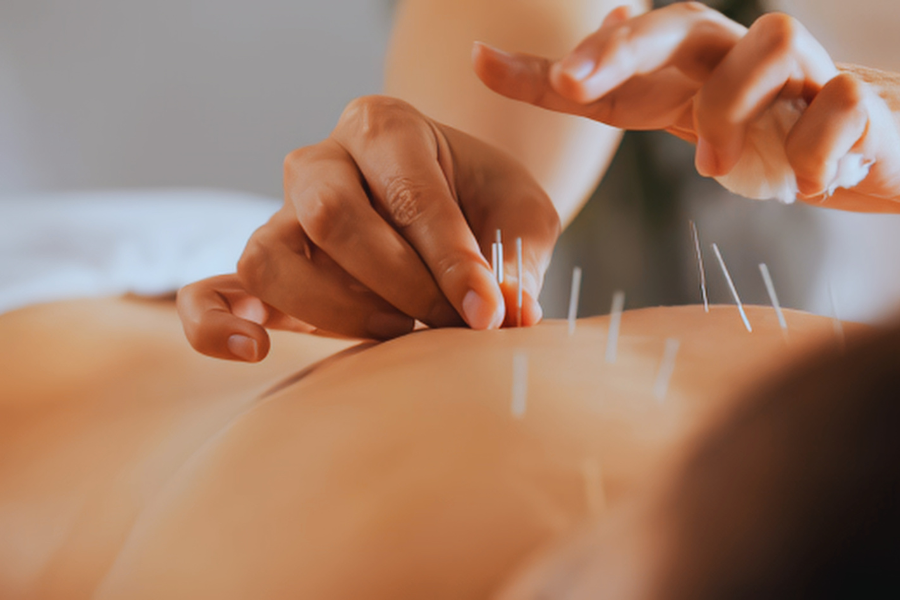
Acupuncture has stronger clinical trial evidence for CP/CPPS than many patients and clinicians realize. A multicenter, sham-controlled trial of 440 men published in Annals of Internal Medicine found that acupuncture achieved 60.6% versus 36.8% response at 8 weeks, with benefits sustained at 32 weeks. The adjusted difference in NIH-CPSI scores was 21.6 points.
A 2025 network meta-analysis of 45 randomized trials involving 3,534 patients found that acupuncture ranked above conventional medications for overall CP/CPPS symptom improvement. Warm needle acupuncture showed the highest ranking. The EAU's 2026 guideline gives acupuncture for primary prostate pain syndrome a Strong, Level 1a recommendation.
How it may work
The mechanisms are not fully established, but proposed pathways include modulation of pelvic nerve signaling, reduction of local inflammation, and release of endogenous opioids. For CP/CPPS specifically, acupuncture may help by relaxing pelvic floor musculature and downregulating central pain processing.
Practical considerations
Treatment typically involves 20 sessions over 8 weeks. Acupuncture is not consistently covered by US insurance plans for pelvic pain indications, so out-of-pocket costs may apply. Look for licensed acupuncturists experienced in urological or pelvic pain conditions.
4. Alpha-Blockers
Alpha-adrenergic blockers (tamsulosin, alfuzosin, silodosin) relax smooth muscle in the prostate and bladder neck. The AUA's 2025 guideline recommends alpha-blockers for voiding symptoms (Moderate recommendation, Grade B).
The key distinction: alpha-blockers help with urinary frequency, urgency, and weak stream. They do not reliably reduce pelvic pain on their own. A 2025 meta-analysis of placebo-controlled trials confirmed that alpha-blockers are ineffective for pain alone, with benefits limited to voiding symptoms.
Who benefits most
Men whose CP/CPPS includes bothersome urinary symptoms alongside pelvic pain. Alpha-blockers are typically trialed for 4 to 6 weeks to assess response.
Who should skip this
Men whose primary complaint is pain without significant voiding symptoms. For these patients, alpha-blockers add side effects (dizziness, retrograde ejaculation) without addressing the core problem.
5. Shockwave Therapy (Li-ESWT)
Low-intensity extracorporeal shockwave therapy (Li-ESWT) is an emerging treatment that delivers focused acoustic energy to the perineum and pelvic region. A 2026 meta-analysis of 8 randomized trials found that focused Li-ESWT devices produced a 6.59-point NIH-CPSI reduction with negligible heterogeneity across studies, and benefits sustained at 6-month follow-up.
Pain reduction was the primary driver of improvement. Notably, the evidence supports focused shockwave devices specifically; radial devices showed inconclusive results with high heterogeneity.
How it works
Li-ESWT is thought to promote local blood flow, reduce inflammation, and modulate pain signaling in the pelvic tissues. Sessions are typically brief (15 to 20 minutes), non-invasive, and performed in an outpatient setting over 4 to 12 weeks.
Practical considerations
Li-ESWT is not yet included in the AUA 2025 guideline and is not widely covered by insurance. It may be most appropriate for men who have not responded to first-line treatments. The distinction between focused and radial devices matters; ask your provider which type they use.
6. Multimodal Phenotype-Directed Therapy
CP/CPPS is not a single disease. It is a syndrome with multiple contributing factors that vary from patient to patient. The UPOINT system classifies these into six domains: Urinary, Psychosocial, Organ-specific, Infection, Neurologic/systemic, and Tenderness.
The AUA's 2025 guideline emphasizes phenotype-directed treatment, not a one-size-fits-all protocol. Research has confirmed that UPOINT domains predict symptom severity.
What this looks like in practice
A multimodal plan might include:
- Behavioral therapy for the Psychosocial domain (catastrophizing, depression, anxiety)
- Pelvic floor PT for the Tenderness domain
- Alpha-blockers for the Urinary domain
- Anti-inflammatories for the Organ-specific domain
- Pain neuroscience education for the Neurologic/systemic domain
The approach requires a clinician willing to assess each domain systematically rather than defaulting to a single treatment. Multidisciplinary pain clinics and urology practices with CP/CPPS expertise are the most likely to offer this level of assessment.
7. Anti-Inflammatory Agents
NSAIDs and COX-2 inhibitors (such as celecoxib) may reduce pain and inflammation in men with CP/CPPS. The AUA's 2025 guideline gives anti-inflammatory agents a Conditional recommendation, Grade B.
In meta-analyses of CP/CPPS pharmacological trials, anti-inflammatory agents show modest symptom relief, though the certainty of evidence is graded Low to Very Low across studies.
Limitations
Anti-inflammatories treat the symptom, not the cause. Long-term NSAID use carries risks of gastrointestinal bleeding, renal impairment, and cardiovascular events. They are most useful as a bridge while pursuing treatments that address underlying mechanisms (behavioral therapy, pelvic floor PT, or multimodal care).
8. Phytotherapy (Quercetin and Pollen Extract)
Plant-based supplements have a modest evidence base for CP/CPPS. The AUA's 2025 guideline gives phytotherapeutics a Conditional recommendation, Grade B. Quercetin (a flavonoid with anti-inflammatory and antioxidant properties) and pollen extract (such as Cernilton/Graminex) are the most studied.
However, the evidence is mixed. In pooled analyses, pollen extract did not reach significance for symptom improvement. Quercetin performed better in individual trials but has not been tested in a large, well-powered RCT.
Practical considerations
Phytotherapy carries a low side-effect profile, which makes it appealing for men seeking adjunctive options. It should not be used as a standalone treatment. Quality and dosing vary widely between supplement brands, and these products are not regulated by the FDA to the same standards as pharmaceuticals.
9. Lifestyle and Self-Management
Lifestyle modifications will not replace targeted treatment, but they can meaningfully reduce CP/CPPS symptom burden, especially for men whose pain worsens with stress.
Evidence-supported strategies
- Stress management: Pain catastrophizing is the strongest predictor of CP/CPPS outcomes. Structured stress reduction techniques (progressive muscle relaxation, diaphragmatic breathing, mindfulness practices) can lower the baseline sympathetic activation that feeds pelvic floor tension.
- Regular exercise: Moderate aerobic activity (walking, swimming, cycling with a proper saddle) has been shown to reduce chronic pain severity across multiple conditions and can help break the sedentary-guarding cycle common in CP/CPPS.
- Dietary modifications: Alcohol, caffeine, spicy foods, and acidic foods are common symptom triggers for men with CP/CPPS. A pain diary can help identify individual triggers.
- Sleep optimization: Poor sleep amplifies central sensitization and pain processing, creating a feedback loop with pelvic pain.
Who benefits most
Every man with CP/CPPS benefits from these foundational habits, but they are especially important for patients with high stress reactivity, poor sleep, or pain that fluctuates with emotional state.
How Lin Health Helps with Chronic Prostatitis (CP/CPPS)
CP/CPPS is a condition where the pain alarm in the nervous system can get stuck. After months or years of pelvic pain, the brain and spinal cord may begin amplifying signals even when no active tissue damage exists. This is nociplastic pain, and research suggests it plays a role in roughly half of men with urologic chronic pelvic pain syndromes.
Lin Health's approach is based on findings from neuroplastic pain research and targets this nervous system component directly. The program uses evidence-based behavioral methods including CBT, ACT, and somatic tracking, delivered by trained recovery coaches through:
- Weekly live sessions with an assigned coach who specializes in persistent pain
- Between-session chat support for real-time guidance
- An app with structured modules, exercises, and pain education content
Lin Health has a dedicated chronic pelvic pain guide and a healing chronic pelvic pain program. The program works alongside (not in place of) medical care, and pairs well with pelvic floor PT and other treatments listed above.
If you have been cycling through antibiotics and medications without improvement, behavioral approaches may be worth exploring. Lin Health is covered by most major insurance plans in CO, TX, FL, CA, and NY, and most patients pay nothing out of pocket. Wait times are short, with a same-day callback after signup.
Explore Lin Health for CP/CPPS.
FAQ
Can chronic prostatitis be cured?
CP/CPPS (NIH Category III) is a chronic condition, and the word "cure" is not typically used in clinical guidelines. However, many men achieve significant and lasting symptom reduction through multimodal treatment. The AUA's 2025 guideline focuses on targeted, phenotype-directed care. Behavioral approaches, pelvic floor PT, and lifestyle changes can help retrain the nervous system and reduce pain over time.
What is the newest treatment for chronic prostatitis?
The most notable recent development is the AUA's April 2025 guideline, which formalized recommendations for behavioral therapy, alpha-blockers (for voiding symptoms only), and multimodal phenotype-directed care. Low-intensity shockwave therapy (Li-ESWT) is also emerging, with a 2026 meta-analysis showing consistent benefit for focused devices.
Is chronic prostatitis caused by stress?
Stress does not cause CP/CPPS on its own, but it is a significant amplifier. Stress activates the sympathetic nervous system, which increases pelvic floor muscle tension and amplifies central pain processing. Pain catastrophizing, a stress-related cognitive pattern, is the strongest predictor of CP/CPPS severity. Managing stress is a core part of effective treatment.
Does pelvic floor therapy help prostatitis?
For CP/CPPS with pelvic floor tension and trigger points, pelvic floor PT has meaningful evidence. The Wise-Anderson protocol showed 72% reporting meaningful improvement. The EAU's 2026 guideline recommends myofascial treatment as a first-line option. Look for a therapist with specific training in male pelvic pain.
How long does chronic prostatitis last?
CP/CPPS is defined as pelvic pain lasting 3 or more months. Without targeted treatment, symptoms can persist for years. Duration varies based on contributing factors and the treatments pursued. Men who address physical and neurological components tend to have better long-term outcomes than those relying on a single approach.
Is CPPS a mental condition?
No. CPPS is a physical condition with measurable features, including pelvic floor dysfunction and altered pain processing. The fact that stress and catastrophizing influence severity does not make it "all in your head." Behavioral therapies work because they target how the brain processes pain signals, a physiological mechanism.
This article is for informational purposes and is not medical advice. Consult a qualified healthcare provider before making changes to your treatment plan. Individual results vary, and no treatment is effective for all patients.


.png)
.png)