
7 Best Treatments for Gluteal Tendinopathy in 2026
Gluteal tendinopathy is more than a simple hip injury. Explore how current research supports exercise, education, and behavioral approaches while explaining when procedures like injections, PRP, or surgery may be considered for persistent symptoms.

Gluteal tendinopathy is the most common cause of lateral hip pain, affecting up to 1 in 4 women over 50. The condition, once labeled trochanteric bursitis, involves degeneration of the gluteus medius and minimus tendons at their attachment to the greater trochanter. Walking, climbing stairs, lying on the affected side, and sitting for long periods can all become painful.
If you have been living with persistent lateral hip pain that has not improved with rest or basic stretching, the treatments below represent the strongest current evidence as of 2026. They span behavioral, exercise-based, procedural, and surgical options, organized by how well each one addresses the full picture of this condition.
Key Takeaways
- Gluteal tendinopathy is the leading cause of lateral hip pain, especially in postmenopausal women, and is now understood as a tendon condition rather than simple bursitis.
- Behavioral pain recovery programs that target fear-avoidance and central sensitization may improve outcomes for adults with chronic lateral hip pain.
- Education combined with progressive exercise outperformed corticosteroid injections for pain and function at 1-year follow-up in a randomized trial of 204 adults.
- Shockwave therapy shows long-term pain advantages over corticosteroid injections for persistent gluteal tendinopathy.
- Surgical repair is reserved for tendon tears that fail conservative management, with durable 5-year outcomes reported in recent studies.
What Is Gluteal Tendinopathy?
Gluteal tendinopathy refers to pathological changes in the tendons of the gluteus medius and gluteus minimus muscles, typically where they insert onto the greater trochanter of the femur. It is the primary structural source of greater trochanteric pain syndrome (GTPS), a condition that causes pain on the outside of the hip.
The condition is most prevalent in women between ages 40 and 60, with postmenopausal women at particularly elevated risk due to hormonal changes that affect tendon health. However, gluteal tendinopathy also occurs in younger active adults, runners, and people who have undergone hip surgery.
Common symptoms include:
- Pain on the outside of the hip, especially when lying on the affected side
- Difficulty with stairs, walking uphill, or single-leg standing
- A gradual onset of pain (rather than a sudden injury)
- Hip stiffness or weakness during weight-bearing activities
- Sleep disruption from pain when lying on the affected side
Beyond the physical symptoms, chronic gluteal tendinopathy can develop features of central sensitization, where the nervous system amplifies pain signals even as the original tissue injury stabilizes. Research has found that 44% of adults with GTPS show central sensitization features, and elevated levels of pain catastrophizing and kinesiophobia (fear of movement) predict treatment failure.
This is why effective treatment for gluteal tendinopathy in 2026 goes beyond the tendon itself.
1. Behavioral Pain Recovery Programs
Who this is for: Adults with gluteal tendinopathy lasting longer than 3 months, especially those who notice their pain is accompanied by movement fear, sleep disruption, frustration, or anxiety about their hip.
When lateral hip pain persists for months or years, the nervous system can begin to amplify and maintain the pain signal independent of the original tendon pathology. This process, called centrally sensitized pain, has been documented in adults with greater trochanteric pain syndrome. Research published in 2025 found that psychological factors differ in persistent tendinopathy, with higher anxiety, pain catastrophizing, and kinesiophobia consistently associated with worse outcomes.
Behavioral pain recovery programs address these factors directly. Using approaches such as cognitive behavioral therapy (CBT), acceptance and commitment therapy (ACT), and pain neuroscience education, these programs help people with chronic pain:
- Reduce fear of movement so they can engage in the exercise-based rehab their tendons need
- Address the thought patterns (catastrophizing, hypervigilance) that amplify pain signals
- Rebuild confidence in physical activity through graded exposure
- Manage the emotional toll of chronic pain, including sleep, mood, and daily function
Evidence supports the role of CBT in reducing central sensitization across chronic musculoskeletal conditions. For tendinopathy specifically, fear of movement and pain catastrophizing are consistently elevated in people whose symptoms persist, making these psychological factors a major barrier to the progressive loading exercises that evidence shows are critical for tendon recovery.
Programs like Lin Health combine these behavioral approaches with recovery coaching, delivered virtually and covered by major insurers. The approach is based on findings from nociplastic pain research, applying CBT, ACT, emotional awareness and expression therapy (EAET), and somatic tracking to help retrain the nervous system's response to chronic pain.
Why it ranks first: Behavioral pain recovery does not replace physical rehabilitation. Instead, it addresses the psychological and neurological barriers that often prevent people from completing it. For adults whose gluteal tendinopathy has not responded to exercise or injections alone, unaddressed fear-avoidance and central sensitization may be the missing piece.
2. Exercise-Based Rehabilitation
Who this is for: All adults with gluteal tendinopathy, from early-stage to chronic. This is the most studied and widely recommended active treatment.
Exercise-based rehabilitation is the foundation of gluteal tendinopathy management. The landmark LEAP trial, a three-arm randomized controlled trial of 204 adults, found that education combined with progressive exercise outperformed injections and wait-and-see at both 8 weeks and 1 year. At 8 weeks, 77% of the exercise-and-education group rated themselves "moderately better" or above, compared with 58% in the injection group and 29% in the wait-and-see group.
A 2024 systematic review with meta-analysis confirmed that exercise-based interventions improve function over minimal care in both the short and long term.
What effective exercise looks like:
- Weeks 1 to 4: Isometric hip abduction holds to reduce pain and begin tendon loading
- Weeks 4 to 8: Slow, controlled isotonic exercises with gradually increasing resistance
- Weeks 8+: Progressive heavy-slow resistance (HSR) training focused on the hip abductors
A recent feasibility study found that heavy slow resistance training combined with patient education was well-tolerated by adults with gluteal tendinopathy, with median adherence of 100% across a 12-week supervised program.
Key principles:
- Avoid positions of tendon compression (legs crossed, standing with hip dropped) during early stages
- Progress load based on symptom response, not arbitrary timelines
- Exercise should be mildly uncomfortable during the session but not flare pain for more than 24 hours after
A qualified physiotherapist experienced with tendon loading can guide this progression. Most clinical guidelines recommend exercise-based rehabilitation as a first-line treatment for gluteal tendinopathy.
3. Extracorporeal Shockwave Therapy (ESWT)
Who this is for: Adults with persistent gluteal tendinopathy (typically 3+ months) who have not responded adequately to exercise and load management alone.
Shockwave therapy delivers focused acoustic energy to the affected tendon, stimulating healing and reducing pain. For gluteal tendinopathy, recent evidence is increasingly favorable.
A 2025 systematic review found that focused shockwave therapy outperforms injections long-term for gluteal tendinopathy pain. A separate 2025 review concluded that ESWT is an effective hip tendinopathy treatment, including for gluteus medius pathology.
Typical protocol:
- 3 to 4 sessions, spaced 1 week apart
- 2,000 to 3,000 pulses per session
- Focused ESWT appears to have stronger evidence than radial shockwave for this condition
Shockwave therapy is not a standalone solution. It works as an adjunct to exercise-based rehabilitation, reducing pain enough to allow progressive loading. Some clinicians combine shockwave with a structured exercise program for stronger long-term results.
Considerations: Shockwave therapy may not be covered by all insurance plans, and availability varies by region. Side effects are generally mild, including temporary soreness and skin reddening at the treatment site.
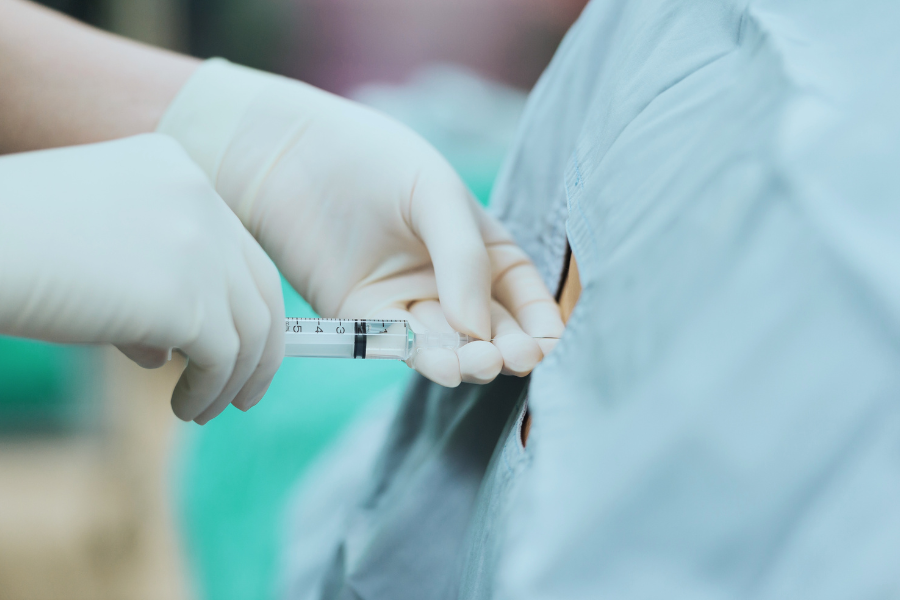
4. Corticosteroid Injections
Who this is for: Adults with acute or severely painful gluteal tendinopathy who need short-term relief to participate in rehabilitation.
Corticosteroid injections, typically delivered under ultrasound guidance into the trochanteric bursa or peritendinous space, provide short-term pain relief for many people with gluteal tendinopathy. In the LEAP trial, 58% of the injection group rated themselves "moderately better" at 8 weeks.
However, the long-term picture is less favorable. By 12 months, the corticosteroid group showed no advantage over wait-and-see in overall outcomes, while the exercise-and-education group maintained superior results.
When injections may make sense:
- Pain is so severe that sleep and basic daily activities are significantly affected
- The patient cannot begin exercise rehabilitation due to pain levels
- As a bridge treatment, not an endpoint
Important limitations:
- Repeated injections may weaken tendon tissue over time
- Injections do not address the underlying tendon pathology or biomechanical contributors
- Evidence suggests injections may hinder long-term rehabilitation
The clinical consensus has shifted: corticosteroid injections are most appropriate as a short-term adjunct to help people start exercise therapy, not as a standalone or repeated treatment.
5. Platelet-Rich Plasma (PRP) Therapy
Who this is for: Adults with chronic gluteal tendinopathy (typically 12+ months) who have not responded to exercise rehabilitation and want to explore regenerative options before considering surgery.
PRP therapy involves drawing a small amount of your own blood, concentrating the platelets, and injecting them into the affected tendon under ultrasound guidance. The concentrated growth factors are thought to promote tendon healing.
For gluteal tendinopathy, the evidence is growing but not yet definitive. A double-blind randomized trial found that a single leukocyte-rich PRP injection surpassed corticosteroid injection results at 2-year follow-up in adults with chronic gluteal tendinopathy lasting more than 15 months. A 2025 systematic review of 11 RCTs found that PRP showed improved GTPS outcomes in a majority of studies.
Considerations:
- PRP is not standardized across providers, and platelet concentration, preparation method, and injection technique vary across providers
- Most insurance plans do not cover PRP, and costs typically range from $500 to $1,500 per injection
- PRP appears more promising for chronic cases that have failed other conservative treatments
PRP should be viewed as an emerging option with supportive but not yet conclusive evidence. Discuss the potential benefits and costs with your provider.
6. Lifestyle and Load Modifications
Who this is for: Everyone with gluteal tendinopathy. These modifications are simple, free, and form the foundation that other treatments build on.
Tendon pain from gluteal tendinopathy is often driven by compressive loading, which occurs when the tendon is squeezed against the greater trochanter. Modifying these loads can reduce pain significantly, even before formal rehabilitation begins.
Evidence-based modifications:
- Avoid crossing your legs when sitting (compresses the gluteal tendons)
- Sleep on your back or the unaffected side with a pillow between your knees
- Avoid standing with your hip dropped to one side (the "hanging on one hip" posture)
- Reduce prolonged sitting and take walking breaks every 30 to 45 minutes
- Modify stairs and hills temporarily if they flare symptoms, without avoiding movement entirely
These principles come from the LEAP trial education protocol and align with physiotherapy consensus guidelines on managing GTPS.
What load modification is NOT:
- It is not rest. Complete rest weakens tendons and muscles.
- It is not permanent activity restriction. The goal is to temporarily reduce compression while building tolerance through progressive exercise.
Think of load modification as the "calm the system down" phase that makes room for exercise and behavioral approaches to work.
7. Surgical Tendon Repair
Who this is for: Adults with confirmed gluteal tendon tears on imaging (MRI or ultrasound) who have not improved after at least 6 months of structured conservative treatment.
Surgery is a last resort for gluteal tendinopathy, reserved for cases with structural tendon tears that fail to respond to rehabilitation, shockwave therapy, and other conservative options. Most people with gluteal tendinopathy will not need surgery.
When surgery is indicated, endoscopic (keyhole) repair has become the preferred technique. A 2026 multilevel meta-analysis found that endoscopic gluteal tendon repair may lower complication rates while achieving functional outcomes comparable to open repair. Separately, a 2026 study reported sustained 5-year improvement after endoscopic gluteus medius repair.
What to expect:
- Endoscopic repair is typically done as day surgery
- Recovery involves 6 to 12 weeks of protected weight bearing with crutches
- Full return to activity may take 4 to 6 months with structured rehabilitation
- Success depends heavily on post-surgical rehabilitation compliance
Important caveats:
- High-grade fatty infiltration of the gluteal muscles predicts poorer surgical outcomes
- Surgery addresses the structural tear but does not resolve central sensitization or fear-avoidance patterns, which may require behavioral support alongside recovery
Talk with an orthopedic surgeon who specializes in hip preservation to determine whether surgery is appropriate for your situation.
How Lin Health Helps with Gluteal Tendinopathy
Chronic gluteal tendinopathy does not exist in isolation. Research shows that nearly half of adults with this condition develop central pain sensitization, meaning the nervous system can amplify and maintain pain even after the tendon has stabilized. Fear of movement, anxiety about the hip, and frustration from failed treatments can create a cycle that keeps the pain system activated, something exercise alone may not address.
Lin Health's approach is based on findings from neuroplastic pain research, targeting the nervous system's role in maintaining chronic pain through methods including CBT, ACT, EAET, and somatic tracking. Participants work with a trained recovery coach through weekly live sessions, between-session chat support, and an app with structured learning and practice materials. The entire program is insured in most states, with high coverage in Colorado, Texas, Florida, California, and New York.
Lin Health does not replace physical rehabilitation for gluteal tendinopathy. Instead, it targets the fear-avoidance and catastrophizing patterns that research identifies as independent predictors of treatment failure for this condition. For people whose hip pain has persisted despite injections, physical therapy, or rest, behavioral pain recovery may address what other treatments miss.
If you have been dealing with chronic lateral hip pain and nothing has worked so far, behavioral approaches alongside continued physical care may be worth exploring. Lin Health offers fully insured care with short wait times, often a same-day callback after signup. Check eligibility for hip pain.
FAQ
What is the fastest way to recover from gluteal tendinopathy?
There is no reliable shortcut. Evidence from randomized trials shows that education combined with progressive exercise produces durable improvement, with 77% of participants rating themselves "moderately better" by 8 weeks. Corticosteroid injections provide faster initial relief but do not produce superior long-term outcomes. Consistent, guided rehabilitation over 8 to 12 weeks is the most reliable path.
Is gluteal tendinopathy the same as hip bursitis?
Not exactly. Gluteal tendinopathy and trochanteric bursitis both cause lateral hip pain, but imaging studies have shown that tendon pathology, not bursal inflammation, is the primary structural source of the condition in most cases. The term "greater trochanteric pain syndrome" (GTPS) now encompasses both conditions, with gluteal tendinopathy considered the dominant contributor.
Can gluteal tendinopathy heal on its own?
In the LEAP trial, 29% of the wait-and-see group reported meaningful improvement at 8 weeks, suggesting that some cases resolve without active intervention. However, this rate was significantly lower than the exercise-and-education group (77%). For most adults with persistent symptoms, structured treatment produces faster and more reliable recovery.
Should I avoid exercise with gluteal tendinopathy?
No. Avoiding movement can weaken the gluteal muscles and tendons further. The goal is to modify, not eliminate, activity. Start with low-compression exercises like isometric hip abduction and progress gradually. Avoid positions that compress the tendon (legs crossed, lying on the sore side), but stay active.
Does shockwave therapy work for gluteal tendinopathy?
Recent systematic reviews indicate that focused shockwave therapy can reduce pain in persistent gluteal tendinopathy and may offer long-term advantages over corticosteroid injections. It is typically used as an adjunct to exercise therapy, not as a standalone treatment.
How long does gluteal tendinopathy last?
Duration varies widely. With structured rehabilitation, many people see meaningful improvement within 8 to 12 weeks. Without treatment, symptoms can persist for months or years. Factors that predict longer duration include high pain catastrophizing, fear of movement, and central sensitization.
Is PRP effective for gluteal tendinopathy?
PRP shows promise for chronic cases. A randomized trial found PRP produced greater improvement than corticosteroid injection at 2 years for adults with symptoms lasting over 15 months. PRP is not standardized across providers and is typically not covered by insurance.
This article is for informational purposes only and is not medical advice. Consult a qualified healthcare provider before beginning or changing any treatment for gluteal tendinopathy.



.png)
.png)