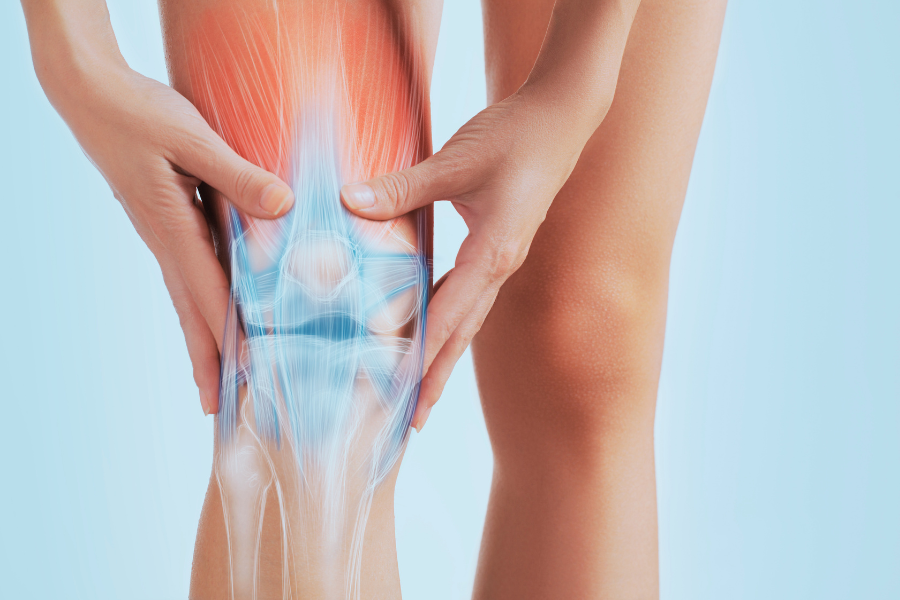
7 Evidence-Based Alternatives to Knee Replacement for Chronic Knee Pain
Chronic knee pain does not always require surgery. This article reviews seven evidence-based alternatives to knee replacement, including exercise, behavioral programs, injections, and lifestyle strategies that address both joint mechanics and nervous system factors involved in persistent pain while supporting long-term mobility goals.

Surgeons in the United States perform over 700,000 replacements each year, making it one of the most common major surgeries in the country. For many people, knee replacement delivers lasting relief. But it is also a major procedure with a months-long recovery, and not everyone with chronic knee pain needs it or is ready for it.
Over 32 million adults in the US live with osteoarthritis, and the knee is the most commonly affected joint. If you are dealing with persistent knee pain and weighing your options, several evidence-based alternatives can reduce pain and improve function before surgery becomes necessary. Some target the physical mechanics of the joint. Others address the way the brain and nervous system process pain signals. Many work best in combination.
This guide covers seven alternatives, starting with the least invasive and most broadly applicable.
Key Takeaways
- Total knee replacement is not the only path forward: several non-surgical alternatives reduce pain and improve function in adults with knee osteoarthritis.
- Brain-based pain programs address central sensitization, present in 20 to 40 percent of adults with knee OA, that structural treatments often miss.
- The AAOS 2021 guidelines recommend exercise, NSAIDs, and weight management as first-line treatments and strongly recommend against opioids.
- Combining behavioral therapy with physical therapy or weight management targets multiple pain drivers at once.
1. Behavioral and Brain-Based Pain Programs
Chronic knee pain does not always match the severity of joint damage visible on imaging. Research shows that central sensitization, a process where the nervous system amplifies pain signals, is present in 20 to 40 percent of adults with knee osteoarthritis. Pain catastrophizing, fear of movement, and stress can all intensify the pain experience beyond what structural damage alone would explain.
Behavioral and brain-based programs use techniques like cognitive behavioral therapy (CBT), acceptance and commitment therapy (ACT), and pain neuroscience education to retrain how the brain and nervous system respond to pain. Unlike injections or bracing, this approach works on the central nervous system directly, which is why it ranks first on this list: it addresses a pain driver that every other alternative here leaves untouched.
The Evidence
A 2025 systematic review and meta-analysis of four RCTs with 628 participants found that adding psychological interventions to standard care improves pain and function in adults with knee osteoarthritis, with small-to-medium effect sizes. A separate 2025 meta-analysis confirmed that CBT and pain coping skills training reduce pain severity when added to standard rehabilitation for knee OA.
Digital delivery also shows results. A 2025 review of ten RCTs with 1,895 participants found that digital behavioral interventions reduce pain and disability in adults with osteoarthritis, making these programs accessible without frequent in-person visits.
Who This Is For
Adults with chronic knee pain, particularly those whose pain seems disproportionate to imaging findings, or whose pain is amplified by stress, fear of movement, or poor sleep. These programs work alongside other treatments on this list, not in place of them.
2. Physical Therapy and Targeted Exercise
Exercise is one of the most consistently recommended treatments for knee osteoarthritis across all major guidelines. The AAOS 2021 guidelines recommend supervised exercise, unsupervised exercise, and aquatic exercise to improve pain and function. The same guidelines recommend neuromuscular training (balance, agility, and coordination work) to improve walking speed and daily performance.
The Evidence
Systematic reviews consistently find that exercise outperforms inactivity for reducing knee pain and improving physical function. However, the average effects are modest and tend to decline over time, likely because adherence drops off after a supervised program ends.
The strongest evidence supports a mix of strength training, flexibility work, and aerobic exercise. Land-based and aquatic programs both deliver benefit. Aquatic exercise can be especially helpful for people who find weight-bearing movement painful.
Who This Is For
Nearly all adults with knee osteoarthritis. Exercise is a first-line treatment across every major guideline. A physical therapist can design a program matched to your current fitness level, pain severity, and functional goals. Learn more about benefits of physical therapy.
3. Weight Management
Each pound of body weight creates roughly four pounds of pressure across the knee joint during walking. For adults with knee osteoarthritis and overweight or obesity, weight loss meaningfully reduces mechanical stress on the joint and can lower the inflammatory markers that contribute to pain.
The Evidence
A 2024 network meta-analysis of 13 RCTs with 2,800 participants found that diet-and-exercise programs reduce pain in adults with knee OA and overweight or obesity.
The STEP 9 trial, published in The New England Journal of Medicine in 2024, showed that once-weekly semaglutide reduced pain 59 percent from baseline, alongside 13.7 percent body weight loss, over 68 weeks in 407 adults with obesity and knee osteoarthritis, compared to 3.2 percent weight loss and 39 percent pain reduction with placebo. GLP-1 receptor agonists represent a new pharmacological avenue for weight-related knee OA, though they require ongoing use and carry their own side effects.
Who This Is For
Adults with knee osteoarthritis who carry excess body weight. Even a modest 5 to 10 percent reduction in body weight can produce clinically meaningful improvements in pain and function.
4. Corticosteroid and Hyaluronic Acid Injections
Joint injections are among the most commonly used non-surgical treatments for knee osteoarthritis. Corticosteroid injections deliver anti-inflammatory medication directly into the joint. Hyaluronic acid (HA) injections, sometimes called viscosupplementation, add lubrication and cushioning to the joint space.
The Evidence
A 2024 systematic review found that corticosteroid injections provide rapid pain relief within two to six weeks, but the effect fades over time. Hyaluronic acid injections have a slower onset but deliver more sustained relief at 12 weeks to six months.
Both options have favorable safety profiles in the short term. The main limitation is that benefits are temporary, and repeated corticosteroid injections may accelerate cartilage loss in some patients with long-term use.
Who This Is For
Adults with moderate knee osteoarthritis looking for short- to medium-term pain relief. Injections can be especially useful as a bridge during a physical therapy or weight management program, or while other treatments take effect.
5. Platelet-Rich Plasma (PRP) Therapy
PRP therapy uses a concentrated sample of your own blood platelets, injected into the knee joint, to support tissue repair and reduce inflammation. Unlike corticosteroid injections, PRP aims to work with the joint's healing processes rather than simply suppress the inflammatory response.
The Evidence
A 2025 systematic review of six high-quality RCTs with 1,162 participants found that PRP may reduce pain more than hyaluronic acid and corticosteroids in adults with mild-to-moderate knee osteoarthritis, though one large trial found no benefit over placebo. A separate meta-analysis of 11 RCTs with 1,616 patients found that PRP reduces pain within 12 months versus control treatments.
The main drawback is cost. PRP is not consistently covered by insurance, and preparation protocols vary between clinics, which can make results less predictable.
Who This Is For
Adults with mild-to-moderate knee osteoarthritis looking for a longer-lasting injectable option who are willing to pay out of pocket. PRP appears less effective for advanced-stage disease.
6. Acupuncture
Acupuncture involves the insertion of thin needles at specific body points. In the context of knee osteoarthritis, it may reduce pain through a combination of local tissue effects, nervous system modulation, and endorphin release.
The Evidence
A 2024 meta-analysis found that acupuncture may reduce pain for several months after treatment in adults with knee osteoarthritis. A 2025 comparative review found that electroacupuncture may outperform other common acupuncture variants.
Guidelines are split on this one. The ACR conditionally recommends acupuncture for knee OA, while the AAOS does not recommend it. Evidence is moderate, and individual responses vary.
Who This Is For
Adults with knee osteoarthritis who prefer a non-pharmacological approach, or those looking to complement other treatments. Acupuncture is generally low-risk and may be especially useful for people who cannot tolerate NSAIDs.
7. Knee Bracing and Unloader Devices
Unloader braces are designed to shift weight away from the damaged compartment of the knee, reducing mechanical stress on worn cartilage. They are most commonly used for medial (inner) compartment knee osteoarthritis, which is the most common pattern.
The Evidence
A 2024 scoping review of 31 RCTs found that bracing can reduce pain in adults with knee osteoarthritis, though the quality of evidence is mixed. A systematic review confirmed that unloader braces reduce joint load, the main mechanical force that drives medial compartment cartilage wear.
The biggest challenge is adherence. Some people find the brace uncomfortable, bulky, or irritating to the skin, which limits long-term use.
Who This Is For
Adults with unicompartmental (typically medial) knee osteoarthritis who are not yet candidates for surgery. Braces are most effective as part of a broader conservative plan that includes exercise and weight management.
How Lin Health Helps with Chronic Knee Pain
The alternatives above span a range of approaches: strengthening muscles, reducing joint load, dampening inflammation, or providing external support. These are all important. But chronic knee pain often involves central sensitization, a process where the nervous system amplifies pain signals beyond what joint damage alone would cause. Fear of movement, stress, sleep disruption, and emotional distress all feed this cycle, and structural treatments alone do not address it.
Lin Health's approach is based on findings from research on neuroplastic pain and evidence-based behavioral therapies including CBT, ACT, and somatic tracking. The program pairs each participant with a trained recovery coach for weekly one-on-one sessions, supported by an app with structured learning and practice modules. You can read more about how the science works and the conditions Lin Health treats, including arthritis and chronic joint pain.
What sets Lin Health apart from general therapy or self-paced apps:
- Coach-led. Weekly sessions with a dedicated recovery coach, plus between-session messaging support.
- Built for physical pain. Coaches are trained in arthritis pain recovery, not general mental health.
- Insurance covered. Most participants pay zero out of pocket. Lin Health is in-network with major carriers in CO, TX, FL, CA, and NY.
- Short wait times. Most patients get a same-day callback after signing up.
Lin Health works alongside medical care. You can combine it with physical therapy, injections, or weight management to address both the mechanical and nervous system drivers of your knee pain.
If you have been managing chronic knee pain with injections, medications, or physical therapy and have not found lasting relief, a brain-based approach may be worth exploring. Lin Health is covered by most major insurance plans, and most participants pay nothing out of pocket. Check your insurance eligibility.
FAQ
Can knee osteoarthritis be treated without surgery?
Yes. Multiple non-surgical options reduce pain and stiffness in adults with knee OA, including exercise, behavioral therapy, weight management, and injections. The AAOS 2021 guidelines recommend trying non-surgical treatments first for most patients.
How do I know if I need a knee replacement?
Knee replacement is typically considered when non-surgical treatments have been tried and pain or functional limitations remain severe enough to significantly affect daily life. Your orthopedic surgeon can help assess whether your imaging findings, symptom severity, and treatment history point toward surgery.
Does physical therapy really help with chronic knee pain?
Physical therapy reduces pain effectively for most adults with knee OA. Effects are strongest during supervised programs and require consistent adherence to maintain long-term benefits.
What is central sensitization, and how does it affect knee pain?
Central sensitization is a process where the nervous system becomes more reactive to pain signals, amplifying the pain experience beyond what structural joint damage alone would cause. It is present in an estimated 20 to 40 percent of adults with knee OA and may explain why some people experience severe pain despite only moderate imaging findings.
Is PRP therapy covered by insurance for knee pain?
PRP therapy is generally not covered by most insurance plans. Costs vary widely between providers and regions. Check with your insurer before pursuing this option.
Can I use multiple alternatives at the same time?
Yes. Many of these approaches complement each other. Combining physical therapy with a behavioral pain program and weight management, for example, targets joint mechanics, nervous system processing, and body composition all at once.
This article is for informational purposes and is not medical advice. Consult a qualified healthcare provider before making decisions about your treatment plan.





.png)
.png)